

By 8 am, the line outside the Harlingen Immigration Court stretched along the sidewalk with more than 100 individuals, including children, teenagers, adults, and shelter staff, waiting patiently in the South Texas heat.
Some arrived prepared for their court date; others had but a few days’ notice that their hearings had been moved up. Many were dressed for court; little dress shirts, ties, carefully chosen outfits – the kind of clothes reserved for important occasions.
As the morning wore on, the heat became harder to ignore.
Several children shared that they had woken up at 6 am to make it to court on time, their breakfast consisting of nothing more than a bowl of cereal. After spending nearly two hours waiting in line, many were still not inside the building. Some children were beginning to get hungry, while others looked tired and uncertain about what would happen next.
For children placed on accelerated immigration court schedules, these hearings can carry enormous weight. Many are expected to navigate a complex legal system while separated from their parents and loved ones. They are asked to appear in court, comply with strict deadlines, and make decisions that may shape their futures, often while still trying to adjust to life in a new country.
Amid their uncertainty, the children found another way to tell their stories. While waiting in line, several were invited to draw pictures of what mattered most to them. These drawings revealed things that court records never could.
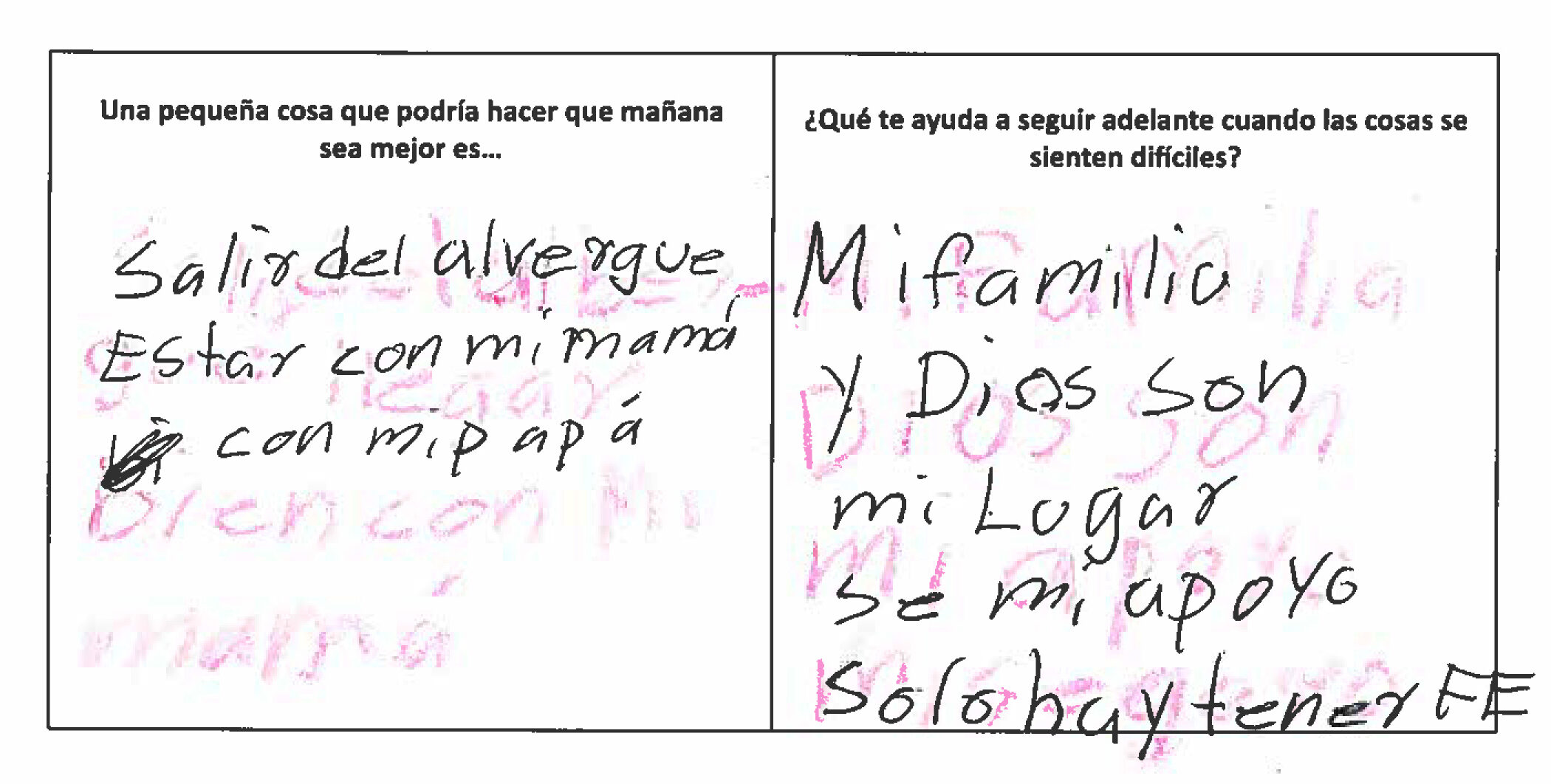
Translation:
Q: “What is one little thing that could make tomorrow better for you?”
A: “To leave the shelter. To be with my mom and with my dad.”
Q: “What is something that helps you keep going when things feel difficult?”
A: “My family and God are my support system. You just have to have faith.”
Many children drew themselves reunited with family members in the United States. Some drew parents they had not seen in months or years.
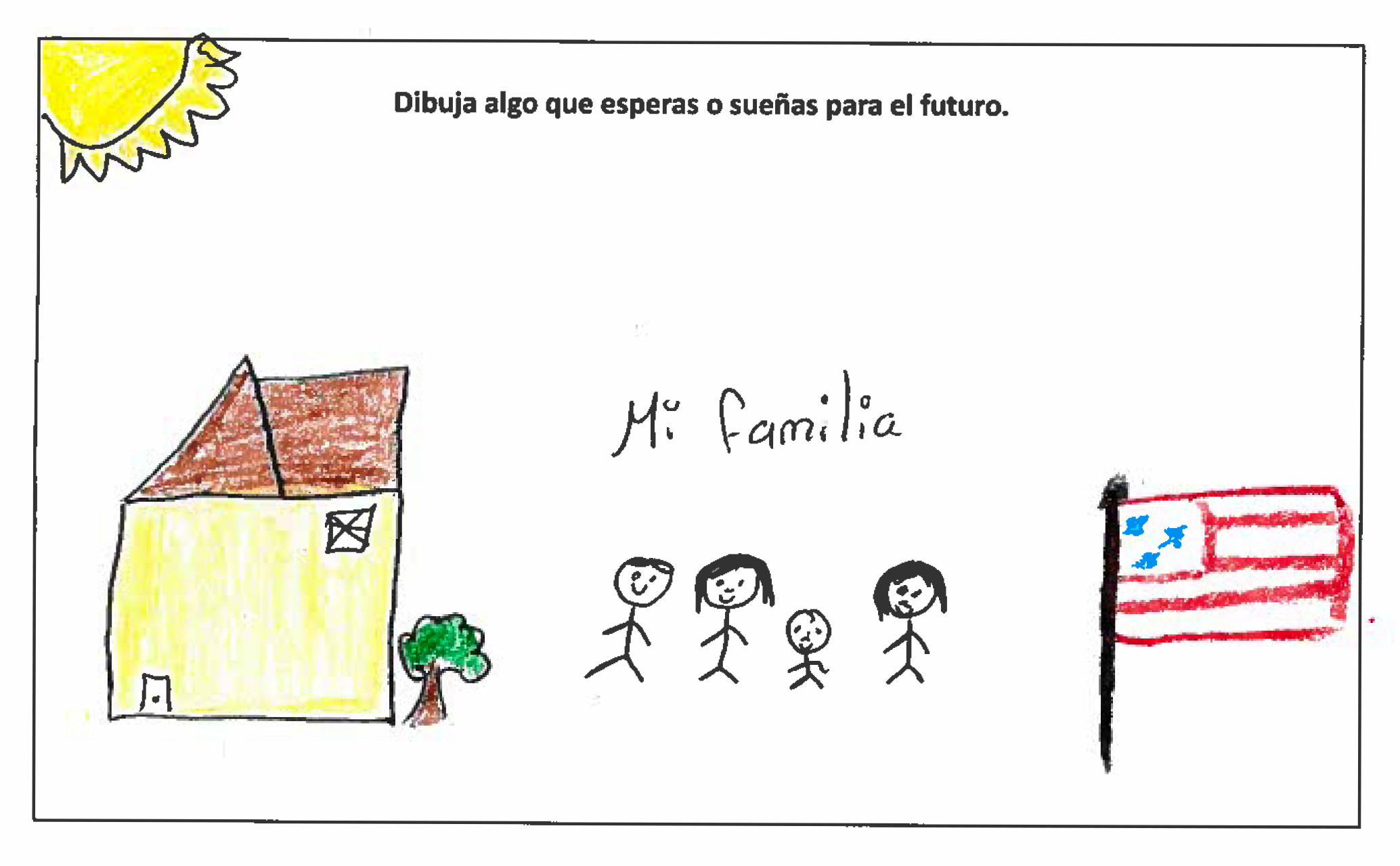
Translation:
Q: “Draw something you hope for or dream of for the future.”
A: “My family”
Several wrote messages about wanting to be with their families. One child explained that faith is what helps them keep going through the uncertainty.
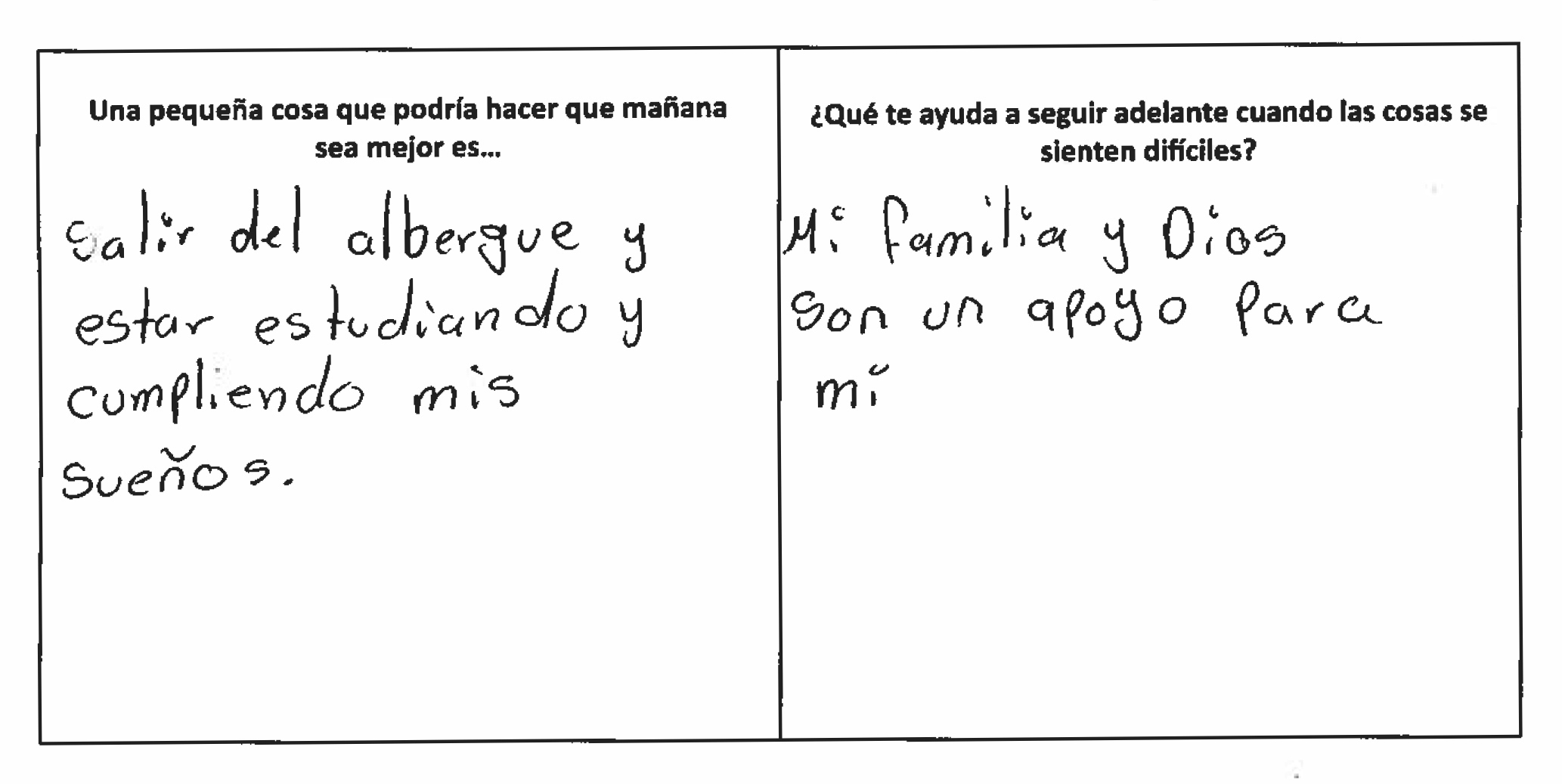
Translation:
Q: “What is one little thing that could make tomorrow better for you?”
A: “To leave the shelter and study to achieve my dreams.”
Q: “What is something that helps you keep going when things feel difficult?”
A: “My family and God are a source of support for me”
Behind every hearing was a child carrying dreams that were simple and deeply human: to be reunited with loved ones, to feel safe, to have support, and to build a future.
The scene outside the courthouse was crowded and exhausting. As children waited in the heat, shelter staff worked to guide them through the daunting process ahead, while ProBAR staff moved from child to child, answering questions, providing information, and helping them understand what to expect.
While the system may move quickly, these children standing in line carry stories that cannot be rushed. And in their drawings, they showed exactly what they are holding onto: family, faith, hope, and the possibility of a future beyond the courtroom doors.
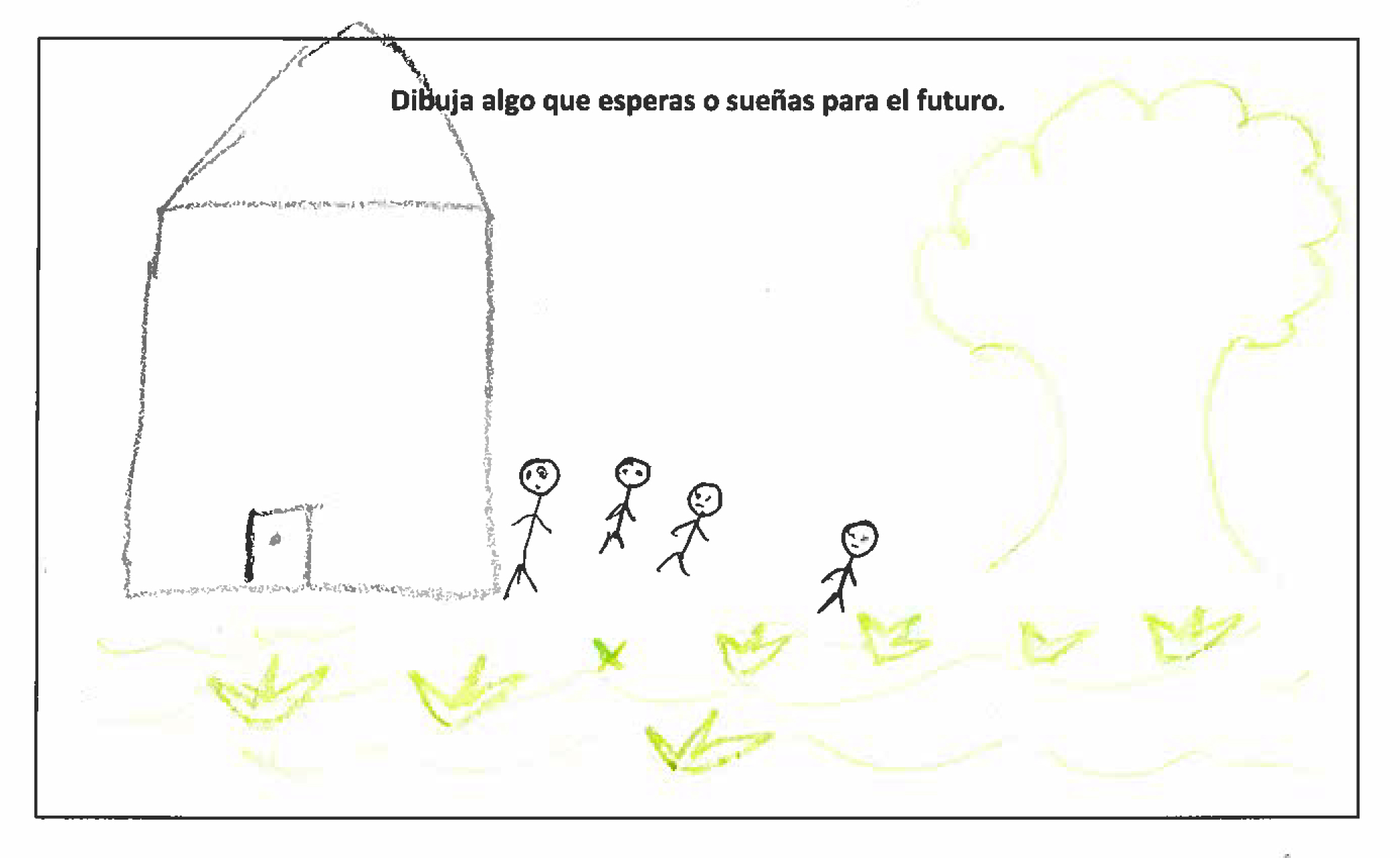
Translation:
Q: “Draw something you hope for or dream of for the future.”
For every child we’ve reached, another is waiting, hoping, and wishing.